WANT MORE?!
“Follow” our blog (in the left-hand column of this site), and we’ll send ya more great tips!

WANT MORE?!
“Follow” our blog (in the left-hand column of this site), and we’ll send ya more great tips!
(Below is the video footage from my “Eating Outside the Box” presentation offered through the Wellness Program at Mutual of Omaha insurance company on 9-13-12.)
Are you or your loved ones experiencing health problems that are keeping you from living life to its fullest (insomnia, digestive distress, fatigue, anxiety, depression, headaches, chronic pain, weight problems, etc.)? Could there be ingredients in your food that are making you sick or exacerbating your symptoms? Find out how I completely eliminated my debilitating chronic illness, despite doctors telling me that I would suffer with “Fibromyalgia” for the rest of my life. Learn about harmful additives that are hidden on food labels, and start reducing YOUR reliance on processed foods…
WANT MORE?!
“Follow” our blog (in the left-hand column of this site), and we’ll send ya more great tips!
CHECK OUT OUR RECIPES PAGE FOR MORE GREAT RECIPES!!!
 Makes eight bars
INGREDIENTS:
1 1/3 cups of pitted and roughly chopped Medjool dates
2 cups plain pecans (not roasted nor salted)
DIRECTIONS:
Preheat oven to 350 degrees.
Place dates in a medium bowl and cover them completely with water. Allow to soak for 20 minutes.
Meanwhile, process the pecans in a food processor until they resemble the texture of breadcrumbs.
When the dates are done soaking, drain the water. Add dates to the food processor and process with the nuts until well-combined and dough comes together into a ball.
Line a 7″ x 11″ baking pan with parchment paper – this makes clean-up easier. (Two bread pans would make a great substitute if you don’t have a 7″ x 11″ pan.)
Press dough evenly into the pan, pressing firmly with your hands to compact the mixture as much as possible. (It’s helpful to wet your hands with water to prevent batter from sticking to your fingers.)
Bake for about 10 minutes, until the top looks a bit dry. Transfer to a cooling rack and cool completely (about one hour).
Transfer bars (with parchment paper) to a cutting board, and cut into eight bars. Enjoy!
These bars are also delicious when enjoyed frozen for increased sweetness and firmness.
CHECK OUT OUR RECIPES PAGE FOR MORE GREAT RECIPES!!!
 In the guest post below, Mariana Ashley shares with us her story of how it took living in another country for her to truly understand what it meant to eat a natural diet composed of REAL foods – – truly real foods; not the pseudo-“natural” processed stuff promoted by much of the American food industry.
– – – – – – – – – – – – – – – – – – – – – – – – – – – – – – – – – – – – – – – – – – – – – – – – – –
“If you live in America, you know how difficult it can be to maintain a diet completely composed of whole, unadulterated foods. Of course, the slow food, green movement that’s blossomed in America over the past decade or so has made it easier in some ways, but there’s just as much marketing of supposedly “healthy, natural” foods that has served only to confuse consumers who want to live a genuinely natural lifestyle.
After years of subsisting on American staples, eating fast food several times a week, going out for dinner, etc., my mother tried to switch things up by committing to natural, organic foods. Unfortunately, most of these foods were processed and packaged, and they paid only lip service to natural foods. If it was labeled natural, organic, or diet, my mother–God bless her–just assumed it was healthy and wholesome.
It wasn’t until I studied abroad in Russia my junior year of college that I realized what it means to actually consume “real food.” Of course, don’t get me wrong—there are plenty of McDonald’s and other American fast food chains in Russia, and there were lots of food items at the grocery store that were far from being healthy or unprocessed. But in Russia, especially outside very urban areas, eating whole foods is far from being an expression of trendiness as it is in many parts of the developed, Westernized world. It’s just a fact of life.
 Grocery stores in Russia are very unassuming places. Most of them are the size of convenient stores in America and carry only the essentials, like milk, eggs, cheese, a few selections of meat and produce. If the vegetables and fruits are not in season, they don’t carry them. For most items, there are only two or three brands available at the most. Some items, like milk, had only one choice. The simple, red-and-white label read “Milk.” No skim, no two percent, no brand label with pictures and marketing. Just milk.
For someone like me, who is completely overwhelmed by the overabundance of brand choice in your typical American grocery store, going to a Russian grocery store became an actually enjoyable experience precisely because of this simplicity. Look at your typical grocery store item in Russia, and you could bet your bottom dollar that the number of listed ingredients could be counted on one hand.
Most Russian families make quick trips to these grocery stores. When it came to purchasing items for making full-fledged meals, it was off to one of the many outdoor markets, which is an experience in and of itself. The Russian family I lived with loved food and loved the bonding experience endemic to meal times in your typical Russian home. I’d never experienced anything like it.
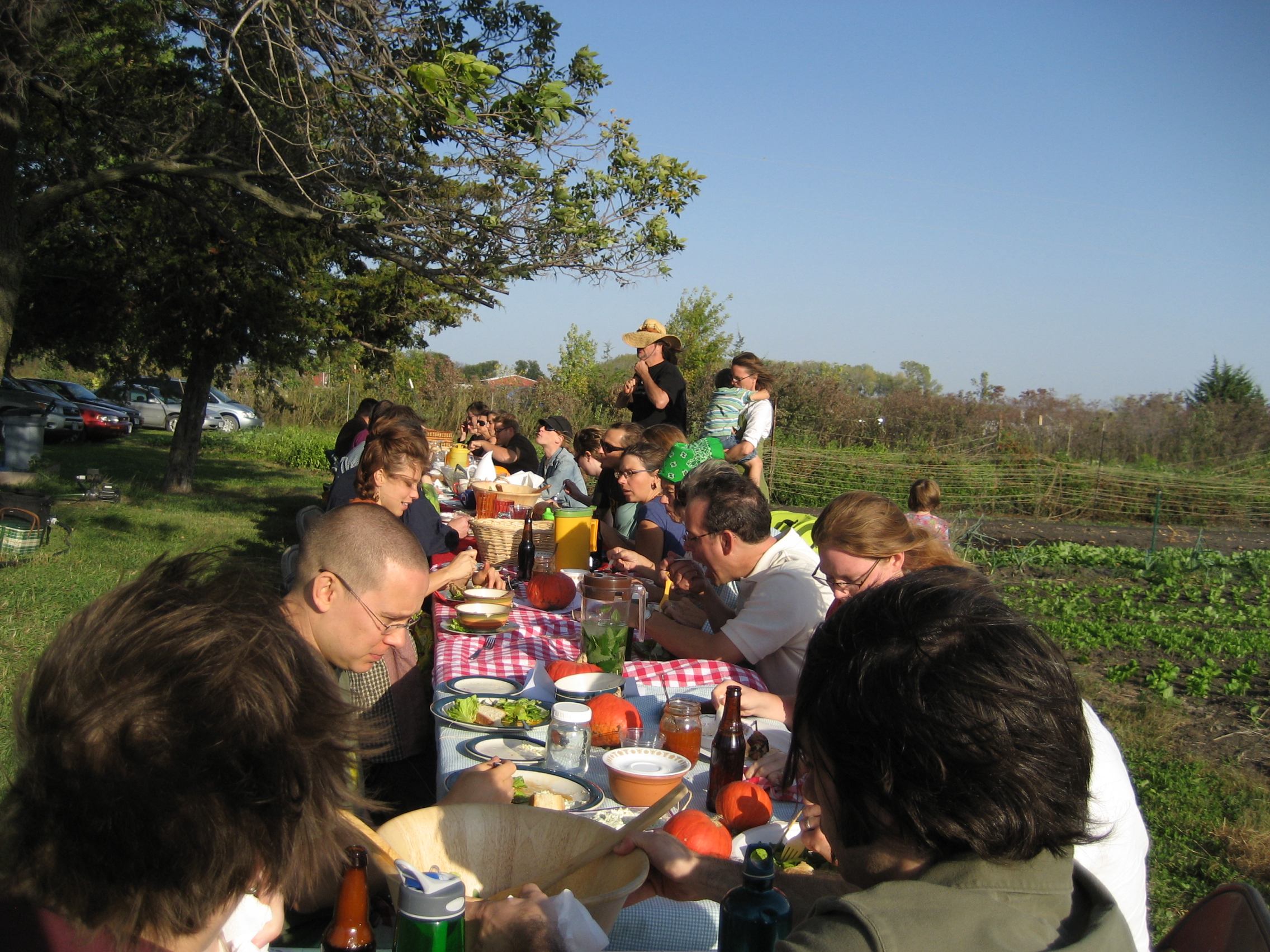 In America, it almost seems that families eat together out of a certain sense of anxiety about the breakdown of family values. Children and teens in America cannot wait to leave the table and get on with their lives on their cell phones or televisions. In Russia, at least in my experience, the whole family, both young and old, genuinely enjoyed meal times. There were always several courses, dessert, beer, wine, or vodka for the adults, free-flowing conversation, banter, joking—in a word, joy.
And it was through this experience of living abroad in a culture that doesn’t fetishize real food but actually and truly enjoys it—partly because they don’t really have much of a choice–that I learned to embrace whole foods. I’ve carried with me this Russian gusto for real food and meaningful conversation, and it’s truly changed my life.”
About the Author
Mariana Ashley is a blogger and freelance writer, whose posts offer a college guide and news for prospective students and parents. She also enjoys writing about sustainable living, parenting, personal finance, and more. She welcomes comments via email at mariana.ashley031@gmail.com.
 Completely Nourished