
“Living Abroad: My Personal Revelation about Real Foods”

In the guest post below, Mariana Ashley shares with us her story of how it took living in another country for her to truly understand what it meant to eat a natural diet composed of REAL foods – – truly real foods; not the pseudo-“natural” processed stuff promoted by much of the American food industry.

– – – – – – – – – – – – – – – – – – – – – – – – – – – – – – – – – – – – – – – – – – – – – – – – – –

“If you live in America, you know how difficult it can be to maintain a diet completely composed of whole, unadulterated foods. Of course, the slow food, green movement that’s blossomed in America over the past decade or so has made it easier in some ways, but there’s just as much marketing of supposedly “healthy, natural” foods that has served only to confuse consumers who want to live a genuinely natural lifestyle.

After years of subsisting on American staples, eating fast food several times a week, going out for dinner, etc., my mother tried to switch things up by committing to natural, organic foods. Unfortunately, most of these foods were processed and packaged, and they paid only lip service to natural foods. If it was labeled natural, organic, or diet, my mother–God bless her–just assumed it was healthy and wholesome.

It wasn’t until I studied abroad in Russia my junior year of college that I realized what it means to actually consume “real food.” Of course, don’t get me wrong—there are plenty of McDonald’s and other American fast food chains in Russia, and there were lots of food items at the grocery store that were far from being healthy or unprocessed. But in Russia, especially outside very urban areas, eating whole foods is far from being an expression of trendiness as it is in many parts of the developed, Westernized world. It’s just a fact of life.

Grocery stores in Russia are very unassuming places. Most of them are the size of convenient stores in America and carry only the essentials, like milk, eggs, cheese, a few selections of meat and produce. If the vegetables and fruits are not in season, they don’t carry them. For most items, there are only two or three brands available at the most. Some items, like milk, had only one choice. The simple, red-and-white label read “Milk.” No skim, no two percent, no brand label with pictures and marketing. Just milk.

For someone like me, who is completely overwhelmed by the overabundance of brand choice in your typical American grocery store, going to a Russian grocery store became an actually enjoyable experience precisely because of this simplicity. Look at your typical grocery store item in Russia, and you could bet your bottom dollar that the number of listed ingredients could be counted on one hand.

Most Russian families make quick trips to these grocery stores. When it came to purchasing items for making full-fledged meals, it was off to one of the many outdoor markets, which is an experience in and of itself. The Russian family I lived with loved food and loved the bonding experience endemic to meal times in your typical Russian home. I’d never experienced anything like it.
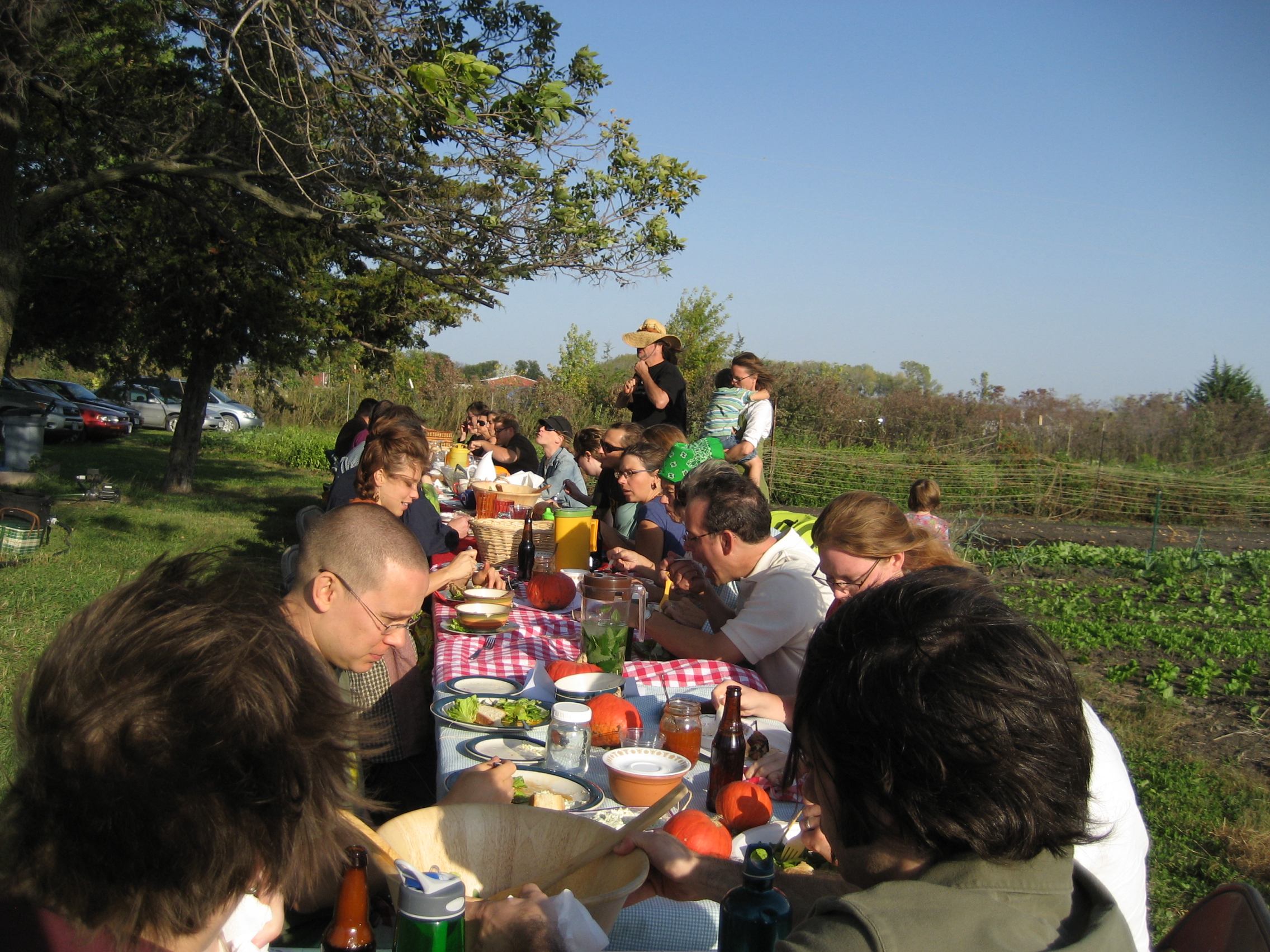
In America, it almost seems that families eat together out of a certain sense of anxiety about the breakdown of family values. Children and teens in America cannot wait to leave the table and get on with their lives on their cell phones or televisions. In Russia, at least in my experience, the whole family, both young and old, genuinely enjoyed meal times. There were always several courses, dessert, beer, wine, or vodka for the adults, free-flowing conversation, banter, joking—in a word, joy.

And it was through this experience of living abroad in a culture that doesn’t fetishize real food but actually and truly enjoys it—partly because they don’t really have much of a choice–that I learned to embrace whole foods. I’ve carried with me this Russian gusto for real food and meaningful conversation, and it’s truly changed my life.”

About the Author

Mariana Ashley is a blogger and freelance writer, whose posts offer a college guide and news for prospective students and parents. She also enjoys writing about sustainable living, parenting, personal finance, and more. She welcomes comments via email at mariana.ashley031@gmail.com.
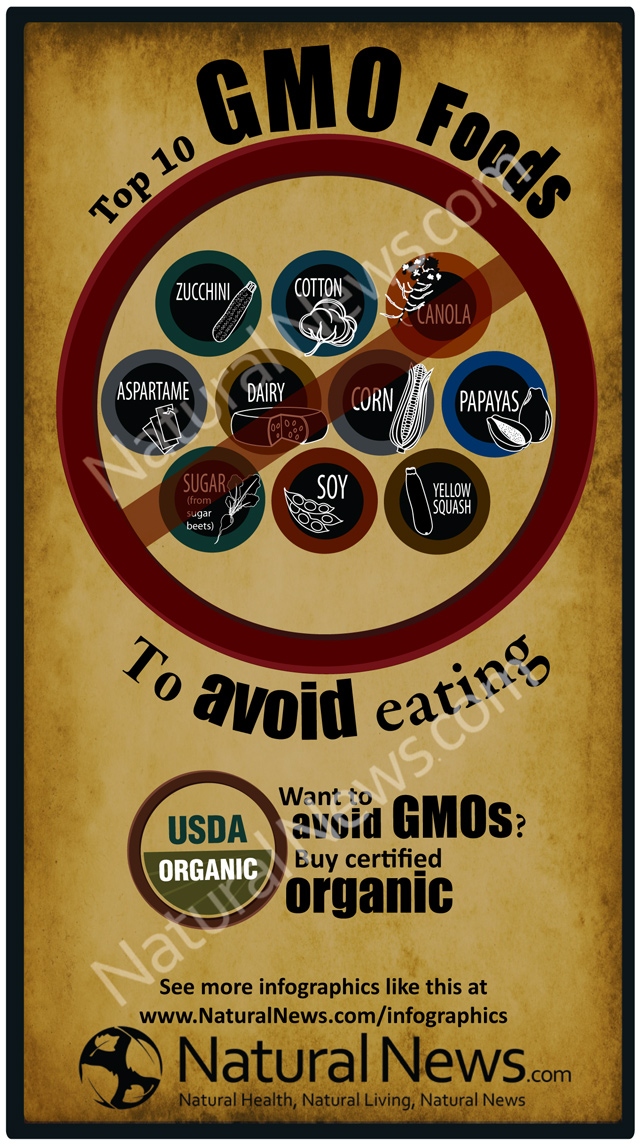
Top 10 GMO Foods to Avoid (from NaturalNews.com)

(This article written by J.D. Heyes was published on NaturalNews.com on 6/1/12.)
Learn more:  http://www.naturalnews.com/036063_GMOs_foods_infographics.html#ixzz240HwuT48 )

“We here at NaturalNews.com pride ourselves in providing our  readers with the most valuable, up-to-date news and information on a wide range  of health-related issues, but we especially like to discuss nutrition because so  much of our health depends on what we put in our bodies – and what we don’t put in them.
See the NaturalNews infographic at:
http://www.naturalnews.com/Infographic-Top-10-GMO-Foods-to-Avoid-Eating.html

Be aware and beware

With that latter thought in mind, we’ve  developed an infographic to highlight the top 10 GMO (genetically modified  organism) foods to avoid, in no particular order:

1. Zucchini: It  goes without saying that many biotech companies say genetically modified foods  are safe for you, but as GMO science expands, reseachers are finding more  evidence that such foods can harm your health. One of those is zucchini. While  not as potentially harmful as other GM foods, zucchini is nonetheless  “engineered” to resist some strains of virus.

2. Cotton:  Considered a food item because its oil can be consumed, cotton – in particular,  genetically modified Bt cotton, common to India and China – has damaging  consequences. According to recent Chinese research, while Bt cotton is capable  of killing bollworms without the use of insecticides, its decreased use has  increased the presence of other crop-harming pests. Also, Bt cotton production  has been linked to drastic depletion of soil nutrients and lower crop yields, as  well as much higher water requirements.

3. Canola: This is  probably one of the most misunderstood, misguided “healthy” food  choices out there right now, but there is little about canola – and similar oils  – that is good for you. Extracted from rapeseed, canola oil and others must be  chemically removed from the seeds, then deodorized and altered, in order to be  utilized in foods. They are  among the most chemically altered foods in our diets.

4. Aspartame: An artificial sweetener found in a number of products,  aspartame – discovered by accident in 1965 by a chemist testing an anti-ulcer  drug – accounts for as many as 75 percent of adverse reactions to food additives  reported to the Food and Drug Administration (FDA), according to some  reports. Some seizures and even some deaths have been blamed on  aspartame.

5. Dairy: A disturbingly high number – as many as  one-fifth – of dairy cows in the U.S. today are given growth hormones to  increase milk production, a figure that has been rising since the FDA approved a  genetically engineered recombinant bovine growth hormone known as rbGH or rbST  for use in dairy cows in 1993. While said to boost production by 5-15 percent,  scientists have expressed concern that the increased levels of IGF-1 (insulin  growth factors-1) from hormone-treated cows may boost the risks of colon and  breast cancer. Since 2008, Hiland Dairy has stopped using milk from dairy  farmers who inject their cows with growth hormone.

6. Corn:  Modified now to create its own insecticide, as many as half of all U.S. farms  growing corn for Monsanto are using genetically modified corn, with tons of it  now being introduced for human consumption, according to the FDA. Doctors at Sherbrooke University Hospital in Quebec recently found Bt toxin from  modified corn in the blood of pregnant women and their babies, as well as in  non-pregnant women.

7. Papayas: Genetically modified papayas have  been grown in Hawaii commercially since 1999, designed to combat the Papaya  Ringspot Virus. Approved for sale and consumption in the U.S. and Canada, GM  papayas cannot be imported or sold in the European Union.

8. Sugar: Sugar from genetically modified sugar beets hit the market in the  U.S. in 2009. They were modified by the Monsanto Corporation to be resistant to  the company’s Roundup herbicide. In 2010 a group of Oregon farmers sued to stop  planting that year of Monsanto’s genetically altered sugar beets over fears the  crops could cross-contaminate other nearby fields.

9. Soy: Like  other foods, soy, too, has been genetically modified to resist herbicides. Soy  is included in soy flour, tofu, soy beverages, soybean oil and scores of other  products, especially baked goods and pastries. According to one report, “[a]fter  feeding hamsters for two years over three generations, those on the GM diet, and  especially the group on the maximum GM soy diet, showed devastating results. By  the third generation, most GM soy-fed hamsters lost the ability to have babies.  They also suffered slower growth, and a high mortality rate among the  pups.”

10. Yellow squash Like zucchini, yellow squash is also a  fast-rising GMO crop in the  U.S., and as such, should cause you concern. If you like squash – and scores of  Americans do – check out a farmer’s market that doesn’t sell GMO squash or grow  your own using non-modified seed.”

Sources for this article  include:
http://www.naturalnews.com/Infographic-Top-10-GMO-Foods-to-Avoid-Eating.html
http://www.naturalnews.com/035734_GMOs_foods_dangers.html
http://www.deccanherald.com
http://www.hilanddairy.com/green/no-artificial-growth-hormones
http://www.huffingtonpost.com
Learn more:  http://www.naturalnews.com/036063_GMOs_foods_infographics.html#ixzz240HZgvcK

Food Additives Affect Children’s Health & Behavior

Have you ever wondered whether our children’s diet is affecting their health…or maybe even the way they feel or behave? Do you assume that certain children can “handle” food additives just fine just because they aren’t overweight or diagnosed with a behavior disorder or medical condition?

I encourage you to view the 5-minute video overview below that details the improvements experienced by children at one elementary school when their parents and school administrators worked together for 2 full weeks to eliminate food additives (colorings, flavorings, flavor enhancers, preservatives, etc.) from their diets.

Would it surprise you to know that some of the benefits reported by the children and their parents and school staff included: increased attention skills, decreased impulsiveness & behavior problems, less difficultly falling asleep at night, decreased bed wetting, fewer headaches & skin rashes, and improved mood and anger control (leading to improved relationships with peers and family members)? Even children who appeared initially to have “nothing wrong with them” were better behaved during the 2-week trial diet.

Please view the following video; and if you would like assistance with reducing the amount of food additives in your child’s diet, check out our “Eating Additive-Free Natural Cookbook & Grocery Shopping Guide” we have created to help ease your transition!

“COMPLETELY NOURISHED” COMMENTS: “While I do enjoy eating a meat-filled diet, I can appreciate the important points made in this article – I think they apply to anyone, vegan or not. What do YOU think about how much we should be concerned with our diets? I’d love to hear from you in the comments section below.”  🙂