Pecan-Date Snack Bars

CHECK OUT OUR RECIPES PAGE FOR MORE GREAT RECIPES!!!

Makes eight bars

INGREDIENTS:

1 1/3 cups of pitted and roughly chopped Medjool dates

2 cups plain pecans (not roasted nor salted)

DIRECTIONS:
Preheat oven to 350  degrees.

Place dates in a medium bowl and cover them completely with  water. Allow to soak for 20 minutes.

Meanwhile, process the pecans in a food processor until they  resemble the texture of breadcrumbs.

When the dates are done soaking,  drain the water. Add dates to the food processor and process with the nuts until  well-combined and dough comes together into a ball.

Line a 7″ x 11″  baking pan with parchment paper – this makes clean-up easier. (Two bread pans  would make a great substitute if you don’t have a 7″ x 11″ pan.)
Press  dough evenly into the pan, pressing firmly with your hands to compact the  mixture as much as possible. (It’s helpful to wet your hands with water to  prevent batter from sticking to your fingers.)

Bake for about 10 minutes,  until the top looks a bit dry. Transfer to a cooling rack and cool completely  (about one hour).

Transfer bars (with parchment paper) to a cutting  board, and cut into eight bars. Enjoy!

These bars are also delicious when  enjoyed frozen for increased sweetness and firmness.

CHECK OUT OUR RECIPES PAGE FOR MORE GREAT RECIPES!!!

Grow your OWN natural produce at home

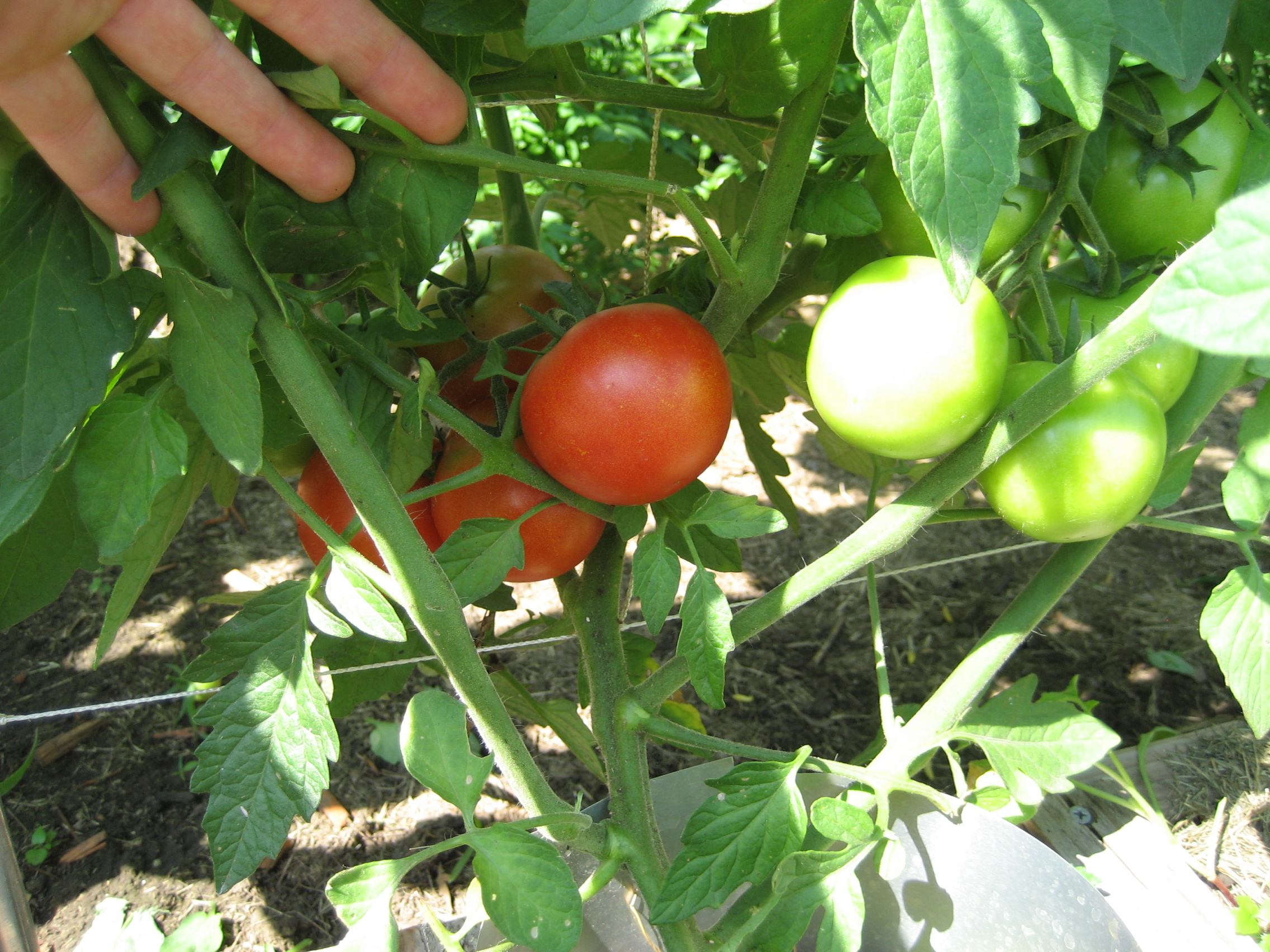
One family’s backyard vegetable garden.

In this post, guest author Peter McAllister shares with us why it’s important to start your own garden. He also explains a few of the first steps you’ll need to take to transition your yard from grass to produce.

So what about you? Do you grow your own food? If so, why do you think it’s important? What tips do you have for others who are just getting started? We’d love to hear from you in the comments section below….
– – – – – – – – – – – – – – – – – – – – – – – – – – – – – – – – – – – – – – – – – – – – – – –

“There is growing awareness about the level of chemical fertilizers and pesticides going into our fresh produce. Commercial producers of fruit and vegetables often use chemical fertilizers and pesticides to control the yield and health of their crops. From the producer’s perspective they want the highest yields with the lowest losses to pests possible because their business is more profitable this way.

However, there is growing awareness about some of the adverse effects of the use of chemical fertilizers and pesticides. Because of this, a growing number of consumers are choosing to eat organically produced fruit and vegetables. This can be done either by purchasing organic produce from stores or growing your own produce.

Adverse effects of the use of chemical fertilizer and pesticides

  • Chemical poisons are carried on through the food chain and can have a knock on effect in harming animals.
  • When you eat fruit and vegetables that have had chemical pesticides applied to them you too are ingesting this poison.
  • The production of chemical fertilizers and pesticides has a far greater impact on the global environment than natural substances.

Growing your own fruit and vegetables is easier than you may think. All it takes is a well maintained growing patch that receives ample sunlight, water and nutrients.

How to set up your own vegetable patch

The first thing you want to consider is the position of the vegetable patch. The position of your growing area will vastly affect the yield you gain. One of the biggest considerations is sunlight. You want to position your growing area so that it achieves the most sunlight possible throughout the day. You can do this as scientifically or as instinctively as you like. One way of accurately measuring the sunlight exposure your garden gets is to set up a camera at a fixed point that has a good overall view. Once an hour take a picture of your yard for an entire day. You can then look at these pictures in a “timeline” to see which areas have the most sun for longest over the course of a day. Or, if this is not your style, you can set up the growing area in a position that you know has good general light exposure (at least 6 hours for most vegetables).

Once you have decided upon an area in which to grow your produce you need to set it up properly. If you just dig up some earth and plant seeds, the chances are you will get less than satisfactory results.

Rotavators/tillers make working the soil much easier!

The first thing to do is mark out the area you want to have designated for growing. You can then lift up the grass (if there is any) by using a turf cutter to cleanly remove the top grass layer. The next stage is to prepare the bed for planting. The best way to do this is to circulate and loosen up the soil. This can be done manually by digging or automatically using a rotavator.

Add organic fertilizer/compost to your garden!

For optimal results you will also want to mix in some organic fertilizer with this soil. The type of compost/fertilizer you use will differ depending on what you want to grow. For example, tomatoes require a high amount of nitrogen, where as carrots/peas are not as dependent on this nutrient. Ask at your local garden centre to get the most appropriate fertilizer mix for your purposes.

Growing can be a tricky procedure and you will learn as you go along. Over time your yields should get bigger and your plants’ health improve. Growing your own food is not only rewarding but also fun; eating food you have grown from scratch yourself is endlessly more rewarding than going to the grocery store.”

About the Author

Peter McAllister is employed by SGM contracts who supply equipment and services such
as
 rotavators for sale. We support sustainable living and like to encourage green projects such as home food growing. For more information see http://www.sgm-uk.com

“Living Abroad: My Personal Revelation about Real Foods”

In the guest post below, Mariana Ashley shares with us her story of how it took living in another country for her to truly understand what it meant to eat a natural diet composed of REAL foods – – truly real foods; not the pseudo-“natural” processed stuff promoted by much of the American food industry.

– – – – – – – – – – – – – – – – – – – – – – – – – – – – – – – – – – – – – – – – – – – – – – – – – –

“If you live in America, you know how difficult it can be to maintain a diet completely composed of whole, unadulterated foods. Of course, the slow food, green movement that’s blossomed in America over the past decade or so has made it easier in some ways, but there’s just as much marketing of supposedly “healthy, natural” foods that has served only to confuse consumers who want to live a genuinely natural lifestyle.

After years of subsisting on American staples, eating fast food several times a week, going out for dinner, etc., my mother tried to switch things up by committing to natural, organic foods. Unfortunately, most of these foods were processed and packaged, and they paid only lip service to natural foods. If it was labeled natural, organic, or diet, my mother–God bless her–just assumed it was healthy and wholesome.

It wasn’t until I studied abroad in Russia my junior year of college that I realized what it means to actually consume “real food.” Of course, don’t get me wrong—there are plenty of McDonald’s and other American fast food chains in Russia, and there were lots of food items at the grocery store that were far from being healthy or unprocessed. But in Russia, especially outside very urban areas, eating whole foods is far from being an expression of trendiness as it is in many parts of the developed, Westernized world. It’s just a fact of life.

Grocery stores in Russia are very unassuming places. Most of them are the size of convenient stores in America and carry only the essentials, like milk, eggs, cheese, a few selections of meat and produce. If the vegetables and fruits are not in season, they don’t carry them. For most items, there are only two or three brands available at the most. Some items, like milk, had only one choice. The simple, red-and-white label read “Milk.” No skim, no two percent, no brand label with pictures and marketing. Just milk.

For someone like me, who is completely overwhelmed by the overabundance of brand choice in your typical American grocery store, going to a Russian grocery store became an actually enjoyable experience precisely because of this simplicity. Look at your typical grocery store item in Russia, and you could bet your bottom dollar that the number of listed ingredients could be counted on one hand.

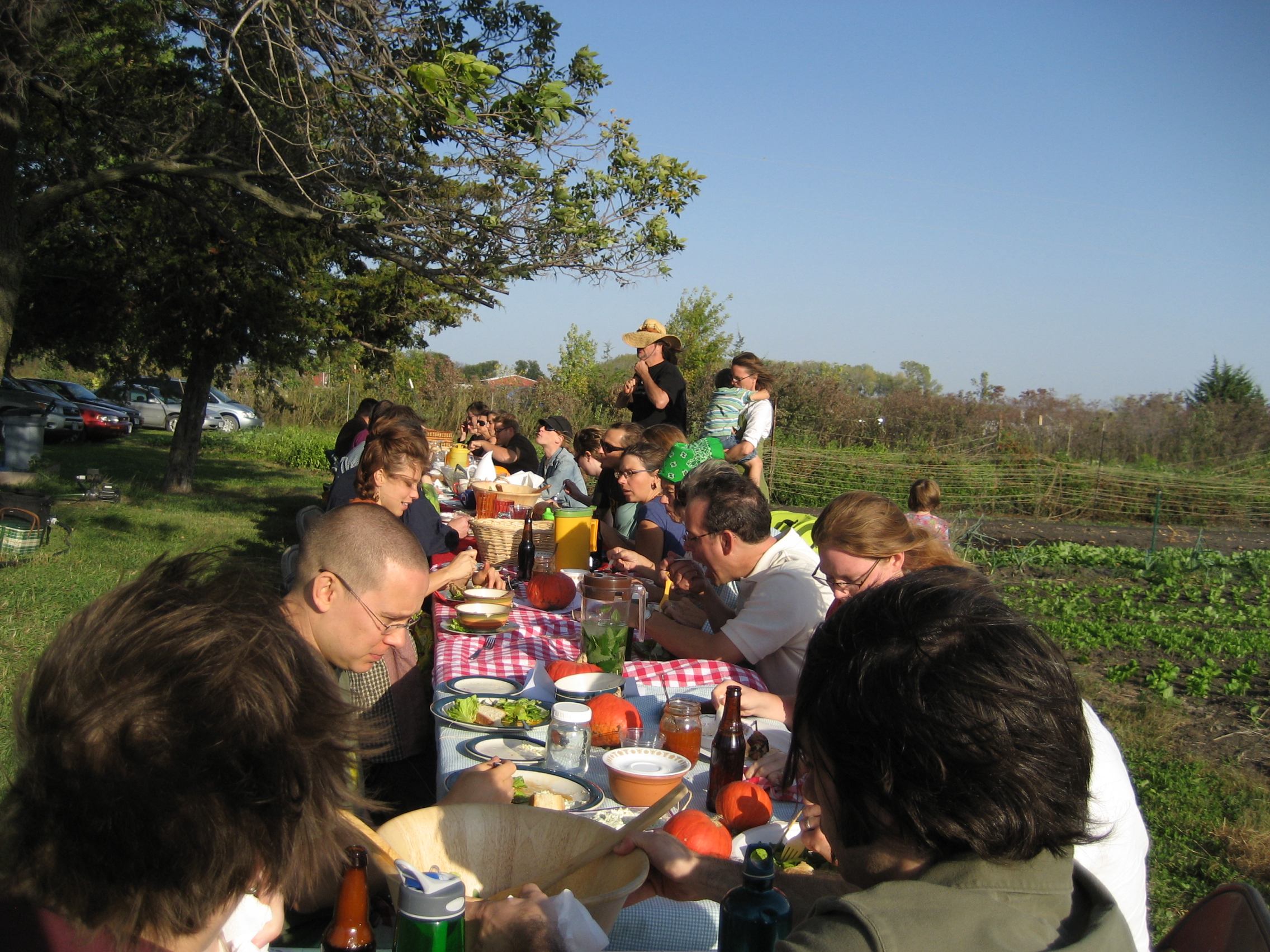
Most Russian families make quick trips to these grocery stores. When it came to purchasing items for making full-fledged meals, it was off to one of the many outdoor markets, which is an experience in and of itself. The Russian family I lived with loved food and loved the bonding experience endemic to meal times in your typical Russian home. I’d never experienced anything like it.

In America, it almost seems that families eat together out of a certain sense of anxiety about the breakdown of family values. Children and teens in America cannot wait to leave the table and get on with their lives on their cell phones or televisions. In Russia, at least in my experience, the whole family, both young and old, genuinely enjoyed meal times. There were always several courses, dessert, beer, wine, or vodka for the adults, free-flowing conversation, banter, joking—in a word, joy.

And it was through this experience of living abroad in a culture that doesn’t fetishize real food but actually and truly enjoys it—partly because they don’t really have much of a choice–that I learned to embrace whole foods. I’ve carried with me this Russian gusto for real food and meaningful conversation, and it’s truly changed my life.”

About the Author

Mariana Ashley is a blogger and freelance writer, whose posts offer a college guide and news for prospective students and parents. She also enjoys writing about sustainable living, parenting, personal finance, and more. She welcomes comments via email at mariana.ashley031@gmail.com.

Top 10 GMO Foods to Avoid (from NaturalNews.com)

(This article written by J.D. Heyes was published on NaturalNews.com on 6/1/12.)
Learn more:  http://www.naturalnews.com/036063_GMOs_foods_infographics.html#ixzz240HwuT48 )

“We here at NaturalNews.com pride ourselves in providing our  readers with the most valuable, up-to-date news and information on a wide range  of health-related issues, but we especially like to discuss nutrition because so  much of our health depends on what we put in our bodies – and what we don’t put in them.
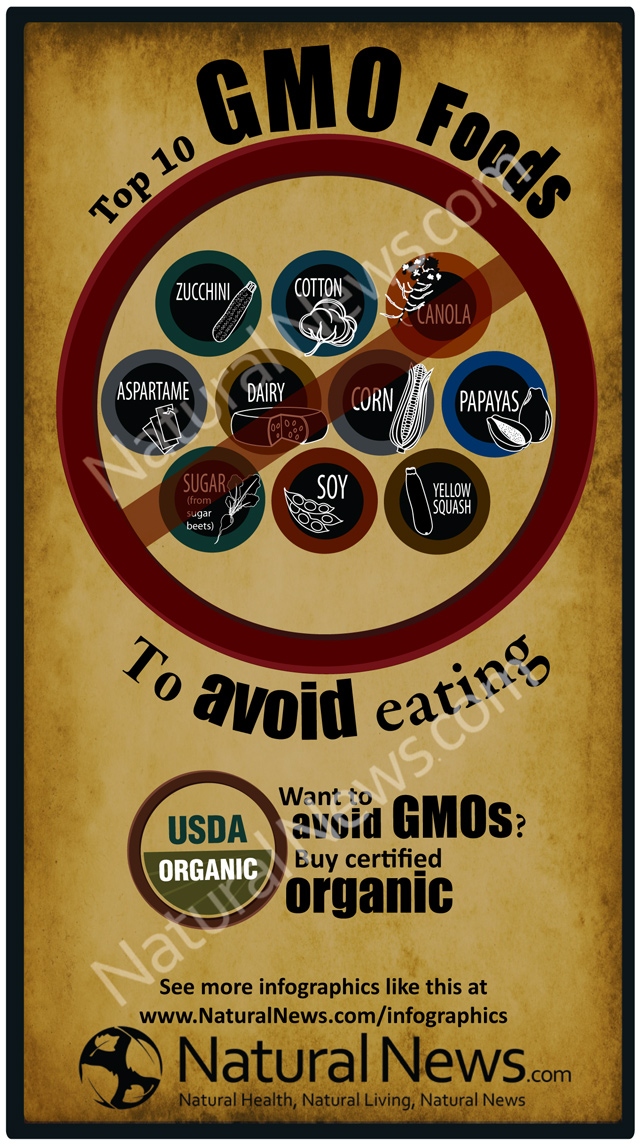
See the NaturalNews infographic at:
http://www.naturalnews.com/Infographic-Top-10-GMO-Foods-to-Avoid-Eating.html

Be aware and beware

With that latter thought in mind, we’ve  developed an infographic to highlight the top 10 GMO (genetically modified  organism) foods to avoid, in no particular order:

1. Zucchini: It  goes without saying that many biotech companies say genetically modified foods  are safe for you, but as GMO science expands, reseachers are finding more  evidence that such foods can harm your health. One of those is zucchini. While  not as potentially harmful as other GM foods, zucchini is nonetheless  “engineered” to resist some strains of virus.

2. Cotton:  Considered a food item because its oil can be consumed, cotton – in particular,  genetically modified Bt cotton, common to India and China – has damaging  consequences. According to recent Chinese research, while Bt cotton is capable  of killing bollworms without the use of insecticides, its decreased use has  increased the presence of other crop-harming pests. Also, Bt cotton production  has been linked to drastic depletion of soil nutrients and lower crop yields, as  well as much higher water requirements.

3. Canola: This is  probably one of the most misunderstood, misguided “healthy” food  choices out there right now, but there is little about canola – and similar oils  – that is good for you. Extracted from rapeseed, canola oil and others must be  chemically removed from the seeds, then deodorized and altered, in order to be  utilized in foods. They are  among the most chemically altered foods in our diets.

4. Aspartame: An artificial sweetener found in a number of products,  aspartame – discovered by accident in 1965 by a chemist testing an anti-ulcer  drug – accounts for as many as 75 percent of adverse reactions to food additives  reported to the Food and Drug Administration (FDA), according to some  reports. Some seizures and even some deaths have been blamed on  aspartame.

5. Dairy: A disturbingly high number – as many as  one-fifth – of dairy cows in the U.S. today are given growth hormones to  increase milk production, a figure that has been rising since the FDA approved a  genetically engineered recombinant bovine growth hormone known as rbGH or rbST  for use in dairy cows in 1993. While said to boost production by 5-15 percent,  scientists have expressed concern that the increased levels of IGF-1 (insulin  growth factors-1) from hormone-treated cows may boost the risks of colon and  breast cancer. Since 2008, Hiland Dairy has stopped using milk from dairy  farmers who inject their cows with growth hormone.

6. Corn:  Modified now to create its own insecticide, as many as half of all U.S. farms  growing corn for Monsanto are using genetically modified corn, with tons of it  now being introduced for human consumption, according to the FDA. Doctors at Sherbrooke University Hospital in Quebec recently found Bt toxin from  modified corn in the blood of pregnant women and their babies, as well as in  non-pregnant women.

7. Papayas: Genetically modified papayas have  been grown in Hawaii commercially since 1999, designed to combat the Papaya  Ringspot Virus. Approved for sale and consumption in the U.S. and Canada, GM  papayas cannot be imported or sold in the European Union.

8. Sugar: Sugar from genetically modified sugar beets hit the market in the  U.S. in 2009. They were modified by the Monsanto Corporation to be resistant to  the company’s Roundup herbicide. In 2010 a group of Oregon farmers sued to stop  planting that year of Monsanto’s genetically altered sugar beets over fears the  crops could cross-contaminate other nearby fields.

9. Soy: Like  other foods, soy, too, has been genetically modified to resist herbicides. Soy  is included in soy flour, tofu, soy beverages, soybean oil and scores of other  products, especially baked goods and pastries. According to one report, “[a]fter  feeding hamsters for two years over three generations, those on the GM diet, and  especially the group on the maximum GM soy diet, showed devastating results. By  the third generation, most GM soy-fed hamsters lost the ability to have babies.  They also suffered slower growth, and a high mortality rate among the  pups.”

10. Yellow squash Like zucchini, yellow squash is also a  fast-rising GMO crop in the  U.S., and as such, should cause you concern. If you like squash – and scores of  Americans do – check out a farmer’s market that doesn’t sell GMO squash or grow  your own using non-modified seed.”

Sources for this article  include:
http://www.naturalnews.com/Infographic-Top-10-GMO-Foods-to-Avoid-Eating.html
http://www.naturalnews.com/035734_GMOs_foods_dangers.html
http://www.deccanherald.com
http://www.hilanddairy.com/green/no-artificial-growth-hormones
http://www.huffingtonpost.com
Learn more:  http://www.naturalnews.com/036063_GMOs_foods_infographics.html#ixzz240HZgvcK